How to Choose the Right LNG Bullet Tank for Your Project
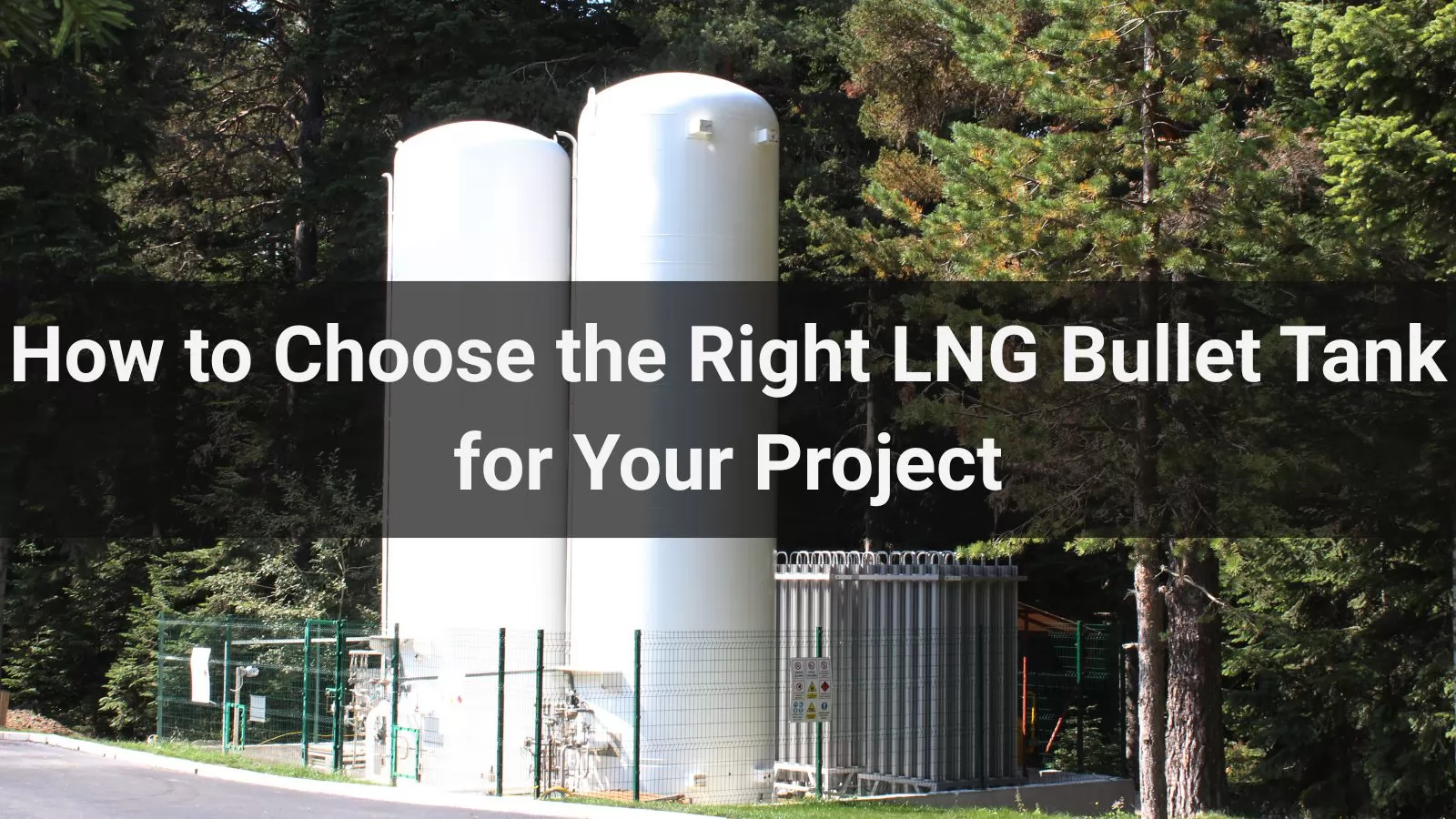
Selecting the right LNG bullet tank is one of the most consequential decisions in any liquefied natural gas infrastructure project. Whether you are developing a satellite LNG station, a peak shaving facility, a remote industrial power supply, or an LNG vehicle fueling station, the tank you choose will directly affect operational safety, regulatory compliance, lifecycle costs, and long-term reliability. This comprehensive guide covers every critical factor — from capacity sizing and pressure ratings to insulation selection, international standards, and supplier evaluation — so that engineers and project managers can make a fully informed procurement decision.
Table of Contents
Understanding LNG Bullet Tanks and Their Applications
An LNG bullet tank — also referred to as a horizontal cryogenic storage tank or LNG horizontal vessel — is a double-walled, vacuum-insulated pressure vessel specifically engineered to store liquefied natural gas at cryogenic temperatures of approximately −162°C (−260°F) and at low to moderate pressures typically ranging from 0.8 to 1.6 MPa (8 to 16 bar). The distinctive bullet-shaped horizontal cylindrical design provides a combination of structural efficiency, transport convenience, and site flexibility that makes it the preferred format for small- to medium-scale LNG applications worldwide.
Unlike large above-ground flat-bottom LNG tanks that require specialized civil engineering and complex safety exclusion zones, bullet tanks are self-contained, factory-fabricated units that can be transported by standard flatbed trailer and commissioned on site within days. This modularity dramatically reduces project lead times and enables scalable infrastructure development.
Primary applications of LNG bullet tanks include:
-
Satellite LNG stations: Receiving and re-gassing LNG delivered by LNG semi-trailers for distribution to industrial or residential end-users not connected to the natural gas pipeline grid.
-
Peak shaving facilities: Storing surplus pipeline gas (liquefied on-site during low-demand periods) and re-gasifying it during peak demand events to prevent grid shortfalls.
-
LNG vehicle fueling stations (L-CNG): Serving as the primary LNG buffer storage for heavy-duty truck, bus, and marine vessel fueling infrastructure.
-
Remote and off-grid industrial power: Supplying LNG as a clean fuel source to power plants, mining operations, and industrial parks in regions without pipeline access.
-
Emergency backup and redundancy storage: Providing gas supply security for hospitals, data centers, and critical infrastructure during pipeline interruptions.
-
Marine and port bunkering: Supporting LNG bunkering operations for ships transitioning from heavy fuel oil to LNG propulsion.
The growing global push toward natural gas as a transition fuel — driven by stricter emissions regulations, carbon neutrality commitments, and rising LNG trade volumes — has significantly expanded demand for reliable, certified LNG bullet tank solutions across all these sectors.
Sizing the Tank: Capacity vs. Project Demand
Tank capacity selection is the foundational engineering decision that cascades through every other aspect of the project: civil foundations, pressure equipment category, transport logistics, site permitting, and capital expenditure. Undersizing a tank forces more frequent LNG deliveries, increases operational cost, and creates supply vulnerability. Oversizing results in excess boil-off gas (BOG), unnecessary capital outlay, and potential permitting complications.
Key capacity sizing factors to evaluate:
-
Daily LNG Consumption (m³/day): Perform an accurate demand analysis based on peak-hour gas flow rates, daily consumption profiles, and seasonal variation patterns. Convert volumetric gas consumption to LNG equivalents (1 m³ LNG ≈ 600 m³ natural gas at standard conditions).
-
Delivery Frequency and Lead Time Buffer: Factor in the reliability of your LNG supply chain. Locations with longer truck delivery lead times or higher supply interruption risk require larger storage buffers — typically 5 to 7 days of average consumption is recommended as a minimum operational reserve.
-
Boil-Off Gas (BOG) Management: LNG continuously warms and evaporates even in well-insulated tanks. Oversized tanks left partially full for extended periods experience higher relative BOG rates. Size tanks to maintain a reasonably high average fill level during normal operations.
-
Peak Demand Events: Industrial and commercial gas users often experience demand spikes 2–4× the average daily consumption. Ensure the tank can sustain peak send-out rates through the vaporizer system without dropping to critically low inventory levels.
-
Modular Scalability: If demand growth is anticipated, consider designing the site layout to accommodate additional bullet tanks in parallel rather than procuring a single oversized vessel. Multiple tanks also provide operational redundancy.
Typical LNG bullet tank capacities available from certified manufacturers range from 10 m³ for small-scale pilot applications up to 350 m³ or more for mid-scale industrial installations. For applications requiring higher total storage volumes, multiple bullet tanks are commonly manifolded together rather than using a single large flat-bottom tank, preserving the advantages of factory fabrication and modular installation.
Cryo-Tech's LNG storage tanks are available across a wide capacity range with customizable nozzle configurations and skid-mounted accessories to match specific project throughput requirements.
Pressure Ratings and Operational Requirements
Pressure rating is a critical specification that must be carefully matched to the downstream gas utilization system. Selecting a tank with an insufficient design pressure can create operational bottlenecks or safety hazards, while over-specifying pressure rating adds unnecessary weight, material cost, and regulatory complexity.
LNG bullet tanks generally operate within the following pressure ranges:
-
Low-pressure tanks (0.4–0.8 MPa): Typically used for stationary satellite stations where downstream vaporization and pressure regulation are handled separately. Lower working pressure enables thinner vessel walls and lighter weight.
-
Medium-pressure tanks (0.8–1.6 MPa): The most common range for LNG fueling stations, peak shaving facilities, and general industrial applications. Provides sufficient pressure head for gravity-fed vaporizers and LNG pumps.
-
High-pressure tanks (1.6–2.5 MPa): Used in L-CNG (liquefied-to-compressed natural gas) fueling stations where LNG must be pressurized to CNG levels (20–25 MPa) via high-pressure pumps and vaporizers.
Critical pressure-related design considerations include:
-
Operating Pressure vs. Maximum Allowable Working Pressure (MAWP): The MAWP must be set at least 10–15% above the normal operating pressure to provide safe operating margin and avoid unnecessary relief valve actuation.
-
Pressure Relief Valve (PRV) Sizing: PRVs must be sized per ASME, EN, or GB standards to handle the maximum credible heat ingress scenario, including full vacuum loss conditions where heat ingress can increase significantly.
-
Pressure Build-Up Coil (PBC): Many LNG bullet tanks incorporate an internal pressure build-up coil that uses ambient heat exchange to raise tank pressure and enable gravity-flow liquid transfer without requiring an external LNG pump.
-
Integration with Vaporizer System: Confirm that the tank's operating pressure is compatible with the inlet pressure requirements of the cryogenic vaporizer and downstream gas regulating system.
-
Design Code Compliance: All pressure parameters must comply with the applicable pressure vessel design code — ASME Section VIII Division 1 (USA/international), EN 13458 (Europe), or GB 150/GB 18442 (China).
Material Selection and Cryogenic Compatibility
Material selection for LNG bullet tanks is a specialized engineering discipline. At cryogenic temperatures of −162°C, many common structural materials become brittle and susceptible to sudden fracture — a failure mode known as ductile-to-brittle transition. Selecting materials that maintain ductility, toughness, and structural integrity at operating temperatures is non-negotiable for LNG containment safety.
Inner vessel (primary containment):
-
Austenitic stainless steel (304L, 316L): The most widely used inner vessel material for LNG tanks. Austenitic stainless retains excellent toughness and ductility down to −196°C, is non-magnetic, and offers good weldability. 316L is preferred where higher corrosion resistance or slightly better low-temperature performance is required.
-
9% Nickel steel (ASTM A553): Used in larger LNG storage vessels requiring greater strength. Offers outstanding cryogenic toughness with a higher yield strength than austenitic stainless, enabling thinner walls at large diameters.
-
Aluminum alloys (5000/6000 series): Occasionally used in transportable LNG tank applications where weight reduction is critical. Aluminum maintains good ductility at cryogenic temperatures and offers excellent strength-to-weight ratio.
Outer vessel (secondary containment / jacket):
-
Carbon steel (Q345R, SA-516 Gr.70): Standard outer shell material. Operates at ambient temperature and requires only conventional structural integrity. Anti-corrosion coatings (epoxy primer, polyurethane topcoat) are applied to protect against atmospheric corrosion.
-
Stainless steel outer jacket: Specified in marine or coastal environments where salt-air corrosion is a significant concern, or in food/pharmaceutical applications requiring sanitary external surfaces.
Weld quality and testing requirements:
-
All inner vessel welds must undergo 100% radiographic testing (RT) or ultrasonic testing (UT) per the applicable pressure vessel code.
-
Charpy V-notch impact testing at cryogenic temperatures (typically −196°C) is mandatory for weld metal and heat-affected zones to confirm adequate low-temperature toughness.
-
Post-weld heat treatment (PWHT) is generally not required for austenitic stainless but may be specified for carbon steel components in specific pressure classes.
-
Hydrostatic pressure testing of the inner vessel at 1.25–1.5× MAWP is performed before insulation assembly and final acceptance.
Insulation Methods for LNG Thermal Stability
The insulation system is the thermal barrier that separates the −162°C LNG from the ambient environment. Its performance directly determines the boil-off gas (BOG) rate, which represents both a product loss and a safety management challenge. Selecting the right insulation method involves balancing thermal performance, cost, reliability, and the maintenance requirements over the tank's 20–30 year operating life.
-
Vacuum Powder Insulation (Perlite): The most widely used insulation system for stationary LNG bullet tanks. The annular space between the inner and outer vessels is filled with expanded perlite powder and evacuated to a medium vacuum (typically 1–10 Pa). This combination effectively suppresses all three heat transfer mechanisms: conduction (through the low-density perlite), convection (eliminated by vacuum), and radiation (partially suppressed by the perlite particles). Perlite vacuum insulation offers reliable long-term performance, relatively straightforward maintenance, and competitive cost for tanks in the 10–200 m³ range.
-
Vacuum Multilayer Insulation (MLI / Super Insulation): Multiple alternating layers of reflective aluminum foil and low-conductivity spacer material (glass fiber or polyester film) are wrapped around the inner vessel under high vacuum (below 0.1 Pa). MLI offers substantially lower heat ingress than perlite vacuum — typically 5–10× better thermal performance — making it the preferred choice for ISO tank containers and applications where BOG minimization is critical. The trade-off is significantly higher manufacturing cost and greater sensitivity to vacuum integrity over time.
-
Combination Perlite + MLI (Hybrid): Some manufacturers offer hybrid systems with MLI inner wrapping combined with perlite fill — providing an intermediate thermal performance level at moderate cost. Suitable for applications where BOG control is important but full MLI cost is not justified.
-
Polyurethane Foam Insulation: Limited to certain transportable tank applications and small LNG cylinders where vacuum-based systems are impractical due to size constraints or frequent physical handling. Foam insulation offers significantly higher heat ingress rates and is generally not recommended for stationary LNG bullet tanks.
Insulation performance benchmarks: For a well-maintained perlite vacuum system, daily heat ingress rates of 0.1–0.3% of tank volume per day (expressed as percentage of working volume) are typical. MLI systems can achieve 0.03–0.1% per day. Always request documented heat ingress test data from the manufacturer when comparing specifications.
Vacuum integrity management is the most critical ongoing maintenance task for any double-wall cryogenic tank. A partial vacuum loss (due to outer jacket leak or getter material exhaustion) can increase heat ingress by orders of magnitude, dramatically increasing BOG and potentially creating overpressure scenarios.
Safety Systems and International Standards
LNG bullet tanks store a cryogenic, flammable, asphyxiation-hazard substance under pressure. A comprehensive, code-compliant safety system is not optional — it is a fundamental requirement for legal operation, insurance coverage, and the protection of personnel and surrounding communities.
Applicable international design and safety standards:
-
ASME Section VIII, Division 1: The dominant pressure vessel design code in North America and widely accepted internationally. Specifies design, materials, fabrication, inspection, and testing requirements for unfired pressure vessels.
-
EN 13458 (Parts 1–3): European standard for cryogenic vessels — static vacuum-insulated vessels. Covers design, fabrication, testing, and documentation requirements specifically for cryogenic applications.
-
GB 18442 (Chinese National Standard): China's mandatory standard for cryogenic insulated pressure vessels, covering design criteria, material requirements, weld inspection, and safety accessories. Required for tanks manufactured and operated in China.
-
NFPA 59A: Standard for the production, storage, and handling of liquefied natural gas (LNG). Specifies facility siting, exclusion zone distances, impoundment requirements, and emergency response provisions.
-
ISO 21009-1: International standard for static vacuum-insulated cryogenic vessels — design, fabrication, inspection, and testing.
-
ADR/IMDG/IATA (for transportable tanks): International transport regulations applicable to LNG tanks moved by road, sea, or air respectively. LNG ISO tanks must comply with IMDG code and UN portable tank instruction T75.
Mandatory safety system components:
-
Dual pressure relief valves (PRVs): Two independent spring-loaded PRVs are required — one in active service and one in standby — with a three-way changeover valve enabling maintenance without depressurizing the tank. PRV set pressure must not exceed the MAWP.
-
Burst disc (rupture disc) assembly: A secondary, non-reclosing pressure relief device installed in series with or parallel to the PRV system. Provides protection against catastrophic overpressure if the PRVs fail to open.
-
Emergency shut-off valves (ESOVs): Remotely actuated valves on liquid fill, liquid withdrawal, and gas vent lines that can be closed rapidly in emergency scenarios. Must be fail-safe (close on loss of power or control signal).
-
Level gauge (LI) and level switches: Differential pressure or capacitive level measurement for continuous tank inventory monitoring, with high-level alarm and high-high level trip functions.
-
Pressure gauge (PI) and pressure switches: Local and remote pressure indication with high-pressure alarm and trip functions.
-
Vacuum gauge (VI): Monitors annular space vacuum level to detect insulation degradation before it impacts tank performance or safety.
-
LNG gas detection system: Point-type and/or open-path infrared (IR) methane gas detectors positioned at all potential leak sources — fill connections, pressure relief valve outlets, pump vaults — with audible/visual alarms and automatic ESOV closure at high-level detection.
-
Cryogenic impoundment/bund: Where required by NFPA 59A or local regulations, an impoundment basin or bund wall must be provided around the tank to contain an LNG spill and limit vapor dispersion.
Site Logistics, Installation, and Maintenance Planning
Even a technically superior LNG bullet tank can become a costly liability if site logistics, foundation design, and long-term maintenance requirements are not properly planned before procurement. Engage civil, structural, and process engineers early in the project development phase to avoid expensive late-stage modifications.
Transport and delivery logistics:
-
Road transport dimensions and weight: Confirm that the delivery route — including bridges, underpasses, and turning radii — can accommodate the tank's transport dimensions. A 200 m³ LNG bullet tank typically measures 10–13 meters in length and 2.5–3.2 meters in diameter, with a transport weight of 20–35 tonnes.
-
Crane capacity and lift plan: A detailed rigging and lift plan must be prepared before delivery. Crane capacity requirements depend on tank weight and lift radius — typically 50–200 tonne cranes for medium-sized tanks.
-
Port and customs clearance (for international orders): Allow 4–8 weeks for customs clearance, import inspection, and inland transportation when procuring tanks from international manufacturers such as those in China.
Foundation and civil works:
-
Concrete saddle foundations: LNG bullet tanks are mounted on two steel saddle supports welded to the outer vessel. These saddles must be anchored to reinforced concrete piers designed to support the full operating weight of the tank (tank tare weight + maximum LNG fill weight) plus wind and seismic loads per local building codes.
-
Differential thermal expansion: One saddle is fixed (anchor); the other is sliding, allowing the inner vessel to contract and expand longitudinally during cool-down, warm-up, and filling operations without inducing excessive stress.
-
Electrical grounding and cathodic protection: All metallic components must be properly bonded and grounded to prevent static electricity buildup. Buried piping and structural steel in aggressive soil conditions may require cathodic protection.
Operational maintenance schedule:
-
Daily: Visual inspection of tank exterior, PRV outlet frost indicators, gas detector function test, pressure/level reading log.
-
Monthly: PRV changeover to standby unit, vacuum gauge reading, external corrosion inspection, ESD valve function test.
-
Annual: Formal inspection per local pressure vessel regulations, calibration of all instruments, PRV bench test (or replacement), inner vessel leak check.
-
5–10 year major inspection: Inner vessel visual inspection (requiring tank warm-up and gas-freeing), full weld inspection, complete PRV replacement, vacuum re-pumping if required.
LNG Bullet Tank vs. Other LNG Storage Options
Understanding how LNG bullet tanks compare to alternative storage formats helps project teams select the most appropriate solution for their specific scale, site, and operational requirements:
-
LNG Bullet Tank vs. LNG ISO Tank Container: LNG ISO tanks (typically 20–40 ft ISO frame containers, 14–26 m³) are designed for intermodal transport and can also be used as temporary or mobile storage. Bullet tanks offer higher capacity per footprint, lower unit cost at equivalent volume, and are better suited for permanent fixed installations. ISO tanks are preferred when portability, rapid deployment, or intermodal flexibility is required.
-
LNG Bullet Tank vs. LNG Semi-Trailer: LNG semi-trailers (typically 30–52 m³) are mobile transport vessels that can double as temporary on-site storage. They are not a substitute for permanent fixed storage but can serve as a bridge solution during project commissioning or as a mobile fueling asset for remote sites.
-
LNG Bullet Tank vs. Full Containment LNG Tank (Flat-Bottom): Large above-ground flat-bottom LNG storage tanks (1,000 m³ to 200,000+ m³) are used for large-scale LNG receiving terminals and liquefaction plants. They require significantly more complex civil engineering, larger exclusion zones, and longer construction timelines. For projects below approximately 500 m³ total storage volume, bullet tank arrays are typically more cost-effective and faster to deploy.
-
LNG Bullet Tank vs. Cryogenic Cylinder (Dewar): LNG cylinders (100–3,000 liters) serve individual equipment or vehicles but are not practical for site-scale storage. Bullet tanks bridge the gap between cylinders and large fixed tanks for projects requiring 10–350 m³ of storage capacity.
Supplier Evaluation and Procurement Strategies
The LNG bullet tank market includes manufacturers ranging from small regional fabrication shops to large integrated cryogenic equipment groups. Choosing the wrong supplier can result in non-compliant equipment, project delays, unexpected maintenance costs, or — in worst cases — safety incidents. A structured supplier evaluation process protects the project owner's investment and ensures regulatory acceptance.
Technical capability assessment:
-
Cryogenic fabrication experience: Verify the supplier's track record specifically in LNG cryogenic vessel fabrication — not just general pressure vessel manufacturing. Request references for similar capacity and pressure rating projects completed in the last 3–5 years.
-
Design engineering capability: Confirm that the supplier employs qualified pressure vessel design engineers capable of producing ASME, EN, or GB code-compliant design documentation, material certification, weld procedure specifications (WPS), and procedure qualification records (PQR).
-
Customization capabilities: LNG bullet tanks for specific projects often require non-standard nozzle configurations, special instrumentation packages, seismic design requirements, or integrated skid-mounted accessories such as vaporizers, gas metering skids, or filling stations. Confirm the supplier's ability to deliver fully customized solutions. CRYO-TECH's customization service covers pressure ratings, nozzle configurations, insulation systems, and complete LNG station packages.
Quality and certification verification:
-
Third-party certification body: Tanks supplied to international markets should carry approval from a recognized inspection body such as Lloyd's Register, Bureau Veritas, TÜV, or DNV. China-manufactured tanks for the domestic market require AQSIQ (SAMR) pressure vessel manufacturing license and CCC or TS certification.
-
Quality management system: ISO 9001 certification demonstrates a documented quality management system, but also request the supplier's internal quality plan (ITP — Inspection and Test Plan) specific to your tank order.
-
Material traceability: All pressure-retaining materials must be supplied with original mill test certificates (MTCs) traceable to the specific heat and lot used in fabrication.
Commercial and after-sales evaluation:
-
Lead time and delivery reliability: LNG bullet tanks typically require 8–20 weeks manufacturing lead time depending on capacity and specification. Confirm production capacity availability and request a documented project schedule with milestone dates.
-
Spare parts availability: Ensure that critical spare parts — PRVs, level gauge components, vacuum valves, instrumentation — are available from the supplier or from local distributors in your country.
-
Field commissioning and technical support: Clarify whether the supplier provides on-site commissioning assistance, operator training, and emergency technical support during the warranty period and beyond.
-
Warranty terms: Standard warranties for LNG bullet tanks cover 12–24 months from commissioning. Confirm what is covered (vessel integrity, insulation performance, instrumentation) and the process for warranty claims.
Frequently Asked Questions (FAQ)
Q: What is the typical lifespan of an LNG bullet tank?
A: A well-designed and properly maintained LNG bullet tank has a design life of 20–30 years. Critical factors affecting longevity include vacuum system integrity, PRV maintenance frequency, outer shell corrosion protection, and inner vessel weld quality. Regular formal inspections per local pressure vessel regulations are mandatory throughout the operational life.
Q: What is boil-off gas (BOG) and how can it be minimized?
A: BOG is natural gas vapor produced by the continuous slow warming of LNG in the tank. It is an unavoidable physical phenomenon. BOG can be minimized by: selecting high-performance insulation (MLI over perlite vacuum where cost-justified), maintaining high average tank fill levels, minimizing tank pressure fluctuations, and using BOG recovery systems to return vapor to the gas supply network rather than venting it.
Q: Can LNG bullet tanks be used for other cryogenic liquids?
A: Tanks designed specifically for LNG should not be repurposed for other cryogenic liquids (LOX, LIN, LAR, LCO2) without engineering review, as pressure ratings, material specifications, and safety accessory sizing may differ. CRYO-TECH also manufactures dedicated cryogenic storage tanks and liquid CO2 storage tanks designed and certified for those specific services.
Q: How long does LNG bullet tank installation typically take?
A: For a pre-engineered, factory-assembled LNG bullet tank with prepared site foundations, installation (crane lift, saddle anchoring, piping connections, instrumentation wiring) typically requires 3–7 days. Pre-commissioning and commissioning activities (leak testing, purging, cool-down, initial LNG fill) add another 3–5 days. Total time from tank delivery to first operational use is typically 1–2 weeks.
Q: What permits and approvals are required for an LNG bullet tank installation?
A: Permitting requirements vary by country and jurisdiction but typically include: pressure vessel registration with the local boiler and pressure vessel authority, fire department approval for LNG storage, environmental impact assessment (for larger installations), planning/zoning approval, and utility connection permits. Allow 2–6 months for permitting in most jurisdictions and engage local regulatory consultants early in the project development phase.
Q: What is the difference between an LNG bullet tank and a cryogenic bullet tank?
A: The term "cryogenic bullet tank" refers to the broader category of horizontal cryogenic pressure vessels, which includes tanks designed for LN2 (liquid nitrogen), LOX (liquid oxygen), LAR (liquid argon), and other industrial cryogenic gases in addition to LNG. An LNG bullet tank is a specific type of cryogenic bullet tank optimized for the properties of liquefied natural gas — including its flammability and the specific temperature, pressure, and material requirements that entails.
Conclusion
Choosing the right LNG bullet tank demands a rigorous, multi-dimensional evaluation that goes well beyond comparing price tags. The optimal tank for your project will be sized precisely to your demand profile, pressure-rated to match your downstream system, fabricated from certified cryogenic-grade materials, insulated to minimize boil-off losses, equipped with a complete code-compliant safety system, and backed by a supplier with the technical capability and after-sales infrastructure to support your operation throughout its 20–30 year life.
By following the structured approach outlined in this guide — working systematically through capacity sizing, pressure specification, material selection, insulation performance, safety compliance, site logistics, and supplier qualification — project managers and procurement engineers can dramatically reduce technical risk, avoid costly specification errors, and ensure that their LNG storage infrastructure delivers safe, reliable, and cost-efficient performance from commissioning through end of life.
CRYO-TECH INDUSTRIAL COMPANY LIMITED, headquartered in Ningbo, China, is a specialized manufacturer of LNG storage tanks, LNG semi-trailers, LNG ISO tank containers, LNG pumps, and cryogenic vaporizers, with extensive project experience across more than 30 countries. Our engineering team provides complete technical consultation, customized design, third-party certified fabrication, and global after-sales support for LNG bullet tank projects of any scale. Contact us today to discuss your project requirements and request a detailed quotation.













.png)



.png)