




_1764315386_WNo_1600d900.webp)
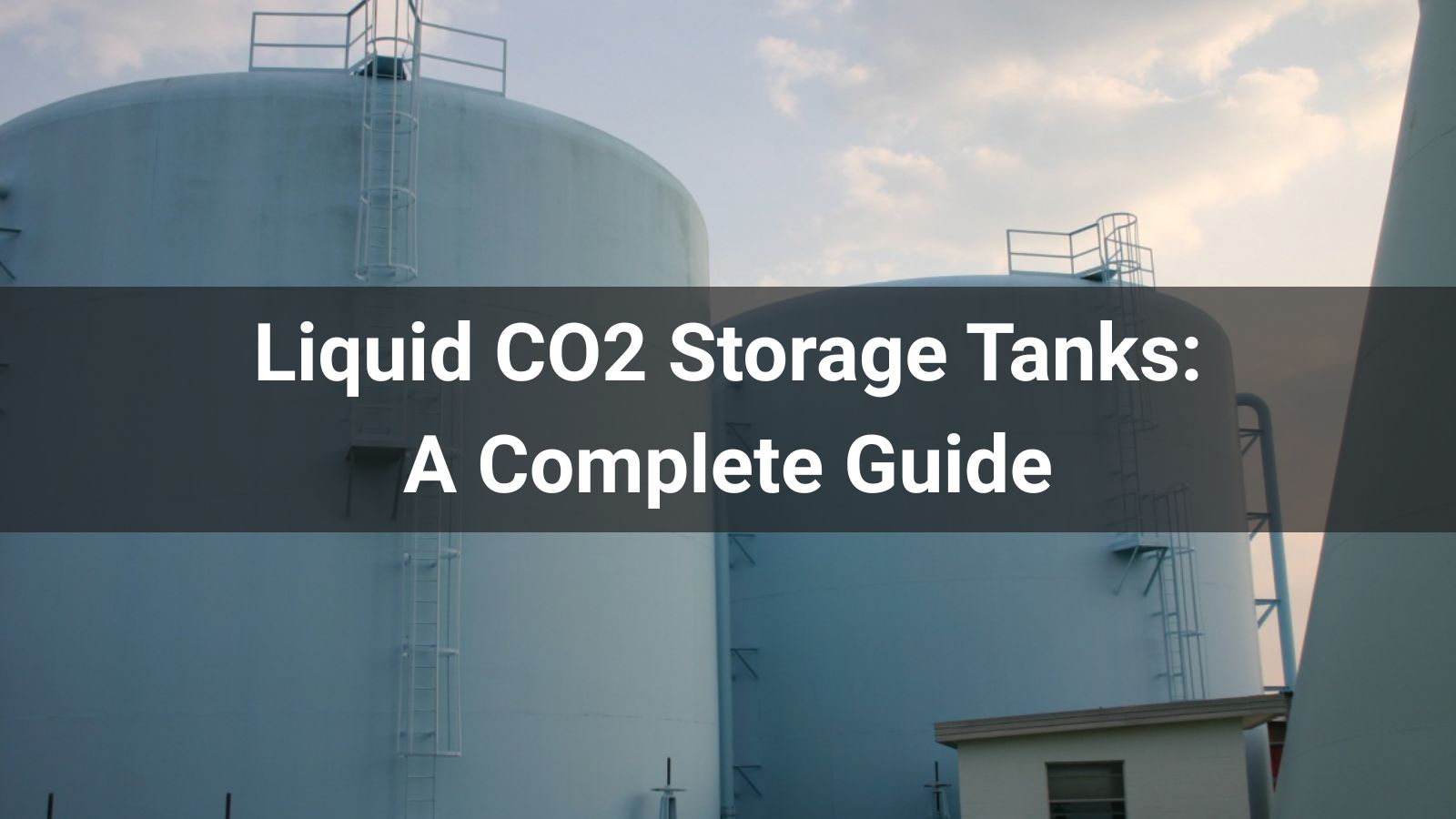
Liquid CO2 storage tanks are essential equipment for industries that require a stable, efficient, and reliable supply of carbon dioxide. By storing CO2 in liquid form under controlled temperature and pressure conditions, these specialized vessels support bulk storage, reduce storage volume, and improve supply efficiency across food processing, beverage production, welding, chemical manufacturing, dry ice production, and carbon capture applications. Compared with conventional gas cylinders, a properly designed bulk storage system can also simplify material handling and provide a more consistent supply for facilities with continuous CO2 consumption.
This guide explains how a liquid CO2 storage tank works, why liquid storage is often preferred over gaseous storage, and which components and safety features influence tank performance. It also examines common industrial applications, important tank selection criteria, and the engineering and support considerations involved in choosing a supplier such as CryoTech. Whether you are planning a new storage installation or upgrading an existing CO2 supply system, understanding these factors can help you make a more suitable long-term investment.
A liquid CO2 storage tank is a specialized pressure vessel designed to store carbon dioxide in its liquid state under controlled temperature and pressure conditions. Unlike ordinary gas cylinders, which store CO2 as compressed gas, a liquid CO2 tank maintains the product within a defined operating range so that a larger quantity can be stored in a relatively compact space. This makes the equipment particularly useful for factories, processing plants, and other facilities that consume carbon dioxide in substantial quantities.
Carbon dioxide changes between gaseous and liquid states according to its temperature and pressure. At normal atmospheric pressure and ambient temperature, CO2 exists as a gas. To maintain it as a liquid, the storage system must operate under suitable pressure and temperature conditions. Industrial liquid CO2 tanks therefore incorporate a pressure-resistant inner vessel, an outer protective shell, and a thermal insulation arrangement designed to limit heat transfer from the surrounding environment.
The tank is also equipped with valves, gauges, filling connections, liquid withdrawal lines, and pressure-relief devices. These components work together to support filling, storage, monitoring, and delivery. Depending on the facility's process requirements, the tank may be connected to pumps, vaporizers, pressure regulators, gas distribution pipelines, or automated control equipment. The complete installation is therefore more than a storage container: it is an important part of the facility's CO2 supply system.
Compared with traditional high-pressure gas cylinders, liquid CO2 storage offers several practical advantages:
For facilities that depend on a continuous supply of carbon dioxide, these advantages can improve daily operations and simplify supply planning. However, the storage tank must be properly sized and integrated with the downstream equipment. A complete evaluation should include the tank, foundation, piping, unloading arrangement, safety equipment, and maintenance requirements.
Storing CO2 as a liquid is widely preferred in many industrial operations because it offers advantages in storage density, bulk handling, supply planning, and operational efficiency. When carbon dioxide is converted into a liquid under suitable pressure and temperature conditions, its volume is substantially reduced compared with its gaseous state at ordinary conditions. This allows industrial users to store a larger quantity of CO2 without requiring the extensive space that would otherwise be needed for an equivalent amount of gas.
The difference in storage density is particularly important for factories with high or continuous CO2 consumption. A facility relying on individual gas cylinders may need frequent deliveries, cylinder changes, and handling activities. These tasks can increase the workload of operators and complicate production planning. A bulk liquid storage tank can centralize the supply and reduce the number of individual containers that need to be managed.
From a supply-chain perspective, liquid CO2 storage makes it possible to receive larger quantities in bulk and maintain a reserve for ongoing production. Operators can monitor the remaining liquid level and arrange replenishment before the stored volume reaches a critical level. This is useful for beverage manufacturers, food-processing plants, dry ice factories, and other operations where an interruption in CO2 supply may affect production schedules.
Another advantage is the flexibility of downstream distribution. Liquid CO2 can be transferred from the storage tank to process equipment through a suitable piping arrangement. Depending on the application, the system may use pumps, vaporizers, pressure regulators, and metering devices to provide CO2 at the required pressure and flow rate. This centralized approach can make it easier to supply several production areas from one storage installation.
Liquid storage systems also incorporate insulation to limit heat transfer from the environment. Reducing heat ingress helps maintain the intended storage conditions and manage pressure changes during normal operation. The tank's insulation performance, pressure-control equipment, and operating procedures all contribute to the reliability of the system.
Nevertheless, liquid CO2 storage is not automatically the best choice for every user. Facilities with low or occasional consumption may find compressed gas cylinders more practical because they require less initial infrastructure. A liquid storage installation involves a pressure vessel, foundation, unloading area, piping, safety equipment, and routine inspection. The most suitable option depends on consumption volume, delivery frequency, operating costs, site conditions, and the required level of supply continuity.
| Form | Pressure & Temperature | Storage Density | Application Suitability |
|---|---|---|---|
| Gaseous CO2 | High pressure, generally ambient temperature | Low compared with liquid storage | Small-scale or occasional use, portable supply, and applications with limited consumption |
| Liquid CO2 | Approximately -20°C to -35°C and 20–22 bar, depending on system design | Very high compared with gaseous storage under ordinary conditions | Medium- to large-scale operations, continuous production, and centralized industrial supply |
The values in the table are indicative reference conditions. Actual pressure and temperature requirements should be established through the tank's engineering design and confirmed against the manufacturer's technical specification. The design must also account for the filling method, operating environment, connected equipment, and relevant pressure-vessel regulations.
Liquid storage is generally worth evaluating when a facility has relatively high CO2 consumption, operates multiple shifts, requires a consistent supply, or needs to distribute carbon dioxide to several points of use. It can also be appropriate when cylinder handling becomes difficult to manage or when delivery frequency creates unnecessary operational work.
For a smaller workshop or a facility that uses CO2 only occasionally, compressed gas cylinders may remain a reasonable option. Before changing to bulk liquid storage, businesses should compare the total cost of ownership, including tank purchase, installation, delivery logistics, operating equipment, maintenance, and the expected savings from reduced cylinder handling.
The best storage arrangement is the one that matches the facility's actual demand. A supplier should review consumption data, delivery schedules, site conditions, and process requirements before recommending a tank capacity or system configuration.
A liquid CO2 storage tank is engineered with specialized components to maintain pressure containment, control heat transfer, monitor operating conditions, and support safe product handling. Each component performs a specific function, but the overall performance of the system depends on how these elements are designed and integrated. Understanding the main parts can help buyers compare technical specifications and evaluate whether a proposed tank is suitable for their application.
The inner vessel is the primary pressure-containing part of the tank and directly holds the liquid carbon dioxide. It must be designed to withstand the specified operating pressure, design pressure, and temperature range. Material selection is therefore an important engineering decision. The material must be suitable for the service conditions and should meet the applicable pressure-vessel design and manufacturing requirements.
The inner vessel's wall thickness, geometry, weld quality, and fabrication process all influence its structural integrity. Manufacturing procedures should include appropriate quality checks and inspections, while the finished vessel should undergo the tests required by the applicable design code. Buyers should review material certificates, welding documentation, inspection records, and pressure-test information as part of the procurement process.
The outer shell surrounds the inner vessel and forms the external enclosure of the insulated tank. In vacuum-insulated designs, it helps create and maintain the space between the inner vessel and the external environment. It also protects the insulation arrangement from weather exposure and physical damage.
The outer shell must be suitable for the intended installation environment. Outdoor equipment may be exposed to rain, sunlight, wind, humidity, and changing ambient temperatures. Appropriate surface treatment and corrosion protection can help maintain its condition over time. The shell should also allow access to the relevant inspection points and supporting equipment.
The insulation system limits heat transfer from the surrounding environment to the inner vessel. Many low-temperature storage tanks use a vacuum-insulated space between the inner vessel and outer shell, sometimes combined with specialized insulating materials. The purpose is to reduce heat ingress and help maintain the required storage conditions.
Insulation performance affects the rate at which the stored liquid absorbs heat and the pressure behavior of the tank during storage. A well-designed system can help reduce unnecessary product vaporization and support stable operation. Buyers should ask the manufacturer about the insulation arrangement, vacuum design, expected thermal performance, monitoring method, and inspection requirements.
Insulation should be considered as part of the overall tank design rather than as an isolated feature. The tank's operating conditions, external environment, piping connections, and installation arrangement can all influence thermal performance. Proper installation and maintenance are important for preserving the intended insulation function.

Safety is one of the most important considerations when handling liquid carbon dioxide. Although CO2 is widely used in industrial applications, its storage involves pressure, low temperatures, and the potential for oxygen displacement if gas is released. A safe installation must therefore combine appropriate pressure-vessel engineering, protective devices, suitable site planning, and clear operating procedures.
The risks associated with liquid CO2 are not limited to the tank itself. Filling operations, unloading connections, pipelines, valves, vent outlets, and downstream equipment all form part of the storage system. A weakness in any of these areas may affect the safety of the installation. Buyers should evaluate the complete system and ensure that equipment selection is supported by a suitable engineering review.
Liquid CO2 plays an important role in many industrial and commercial operations. Its ability to be stored in bulk and supplied in controlled quantities makes it useful for processes that require carbon dioxide as a process gas, cooling medium, carbonation source, or production input. As industries seek more efficient material handling and reliable supply arrangements, liquid CO2 storage tanks have become an important part of many facility designs.
The required storage capacity and equipment configuration vary considerably by application. A beverage factory may prioritize product quality and stable carbonation, while a dry ice plant may require a high liquid withdrawal rate. Chemical manufacturers may have specific purity and process requirements, and carbon capture projects may involve larger storage volumes and specialized system interfaces.
Major industries using liquid CO2 include:
Carbon dioxide is widely used in beverage carbonation, food processing, and modified-atmosphere packaging. In beverage production, CO2 is introduced under controlled conditions to create the desired carbonation level. A stable supply is important for maintaining consistent product characteristics and avoiding interruptions during production.
Food-processing facilities may also use CO2 in cooling, freezing, and packaging applications. For these operations, the storage system should be matched to the required consumption rate and product specification. Where CO2 comes into contact with food or beverages, the supplied gas must meet the relevant food-grade requirements, and the complete handling system should be suitable for the application.
A bulk liquid CO2 tank can supply several production lines through a centralized distribution system. Level monitoring and planned replenishment help manufacturers maintain an adequate reserve and coordinate deliveries with production schedules.
Carbon dioxide is used in certain metal fabrication and welding processes, including gas metal arc welding applications. It can be used as a shielding gas or as one component of a mixed shielding gas, depending on the welding process, material, and required weld characteristics.
Manufacturing workshops and large fabrication plants may have multiple welding stations operating simultaneously. A centralized CO2 supply can help reduce the need for individual cylinder handling and provide a more organized gas distribution arrangement. The system may include a liquid storage tank, vaporization equipment, pressure regulation, and pipelines connecting the supply to different work areas.
The tank and downstream equipment should be selected according to the required gas flow, peak demand, operating pressure, and welding equipment specifications. The quality and composition of the supplied shielding gas must also match the relevant welding procedure.
Chemical and pharmaceutical manufacturers use carbon dioxide in a variety of process applications. Depending on the production method, CO2 may be used for pH adjustment, inerting, cooling, extraction, or as a process input. Some applications require a steady supply throughout production, while others consume CO2 in controlled batches.
Storage system selection should take account of the required purity, daily consumption, process pressure, and connection requirements. The tank may need to integrate with pumps, vaporizers, regulators, flow meters, and automated process controls. These components should be selected according to the specific operating conditions rather than treated as interchangeable accessories.
For applications with strict product-quality requirements, buyers should confirm the CO2 specification and supply-chain controls before finalizing the storage design. Proper documentation and clear operating procedures help maintain consistency between the stored product and the downstream process.
Although these industries all use carbon dioxide, their storage requirements are not identical. Food and beverage manufacturers may prioritize product quality and continuous supply. Welding facilities may focus on stable gas delivery and distribution to multiple workstations. Dry ice manufacturers may require high liquid withdrawal capacity, while carbon capture projects may need storage equipment that integrates with specialized process and transportation systems.
Before choosing a tank, businesses should define their average and peak CO2 consumption, required reserve period, delivery method, process pressure, outlet conditions, and installation limitations. They should also determine whether the application requires additional equipment such as vaporizers, pumps, pressure regulators, flow meters, or automated monitoring.
By matching tank capacity and system configuration to the actual process, companies can avoid unnecessary investment and create a more practical CO2 supply arrangement. A manufacturer with relevant engineering experience can help review the application and identify the equipment specifications that need to be confirmed before production.
Selecting the proper liquid CO2 storage tank is critical for operational efficiency, product supply, and workplace safety. Industrial users should evaluate their process requirements, storage capacity, operating conditions, installation environment, and compliance obligations before investing in a tank. A vessel that is too small may not provide sufficient reserve capacity, while an unnecessarily large system can increase the initial investment and installation requirements.
The most suitable tank is not necessarily the one with the largest capacity or the lowest purchase price. It is the one that meets the facility's actual demand and can be integrated into the existing or planned CO2 supply system. The following factors provide a practical framework for evaluating different options.
Storage capacity should be based on the facility's actual CO2 consumption rather than an approximate estimate. Buyers should review average daily usage, peak demand, production shifts, seasonal variations, and the interval between deliveries. A plant that operates continuously may need a larger reserve than a facility with intermittent production.
Delivery frequency is another important consideration. If the supplier can deliver CO2 frequently, the required reserve may be different from that of a remote facility where deliveries are less frequent. The storage tank should provide enough usable capacity to support normal production between deliveries while maintaining an appropriate safety margin.
Future expansion should also be considered. If a factory plans to add production lines or increase output, the tank capacity and connection arrangement should be reviewed in advance. A scalable system may provide more flexibility than a design that only accommodates current demand.
Before requesting a quotation, prepare the following information:
The inner vessel material must be suitable for the intended pressure and temperature conditions. Buyers should review the material specification, fabrication procedures, welding quality, inspection records, and relevant manufacturing documentation. The selected material and vessel construction should comply with the applicable pressure-vessel design requirements.
Insulation performance is equally important because heat transfer from the environment can affect the stored product and the tank's pressure behavior. A vacuum-insulated arrangement is commonly used in low-temperature storage equipment to reduce heat ingress. Buyers should ask about the insulation structure, vacuum design, thermal performance, and inspection or maintenance requirements.
The external environment should also be considered. Tanks installed outdoors may be exposed to humidity, rain, sunlight, and changing ambient temperatures. Appropriate external protection and regular inspection can help maintain the equipment's condition over its service life.
Liquid CO2 storage requires the tank to operate within a defined pressure and temperature range. Buyers should distinguish between normal operating pressure, design pressure, and maximum allowable working pressure. These values serve different purposes and should be clearly identified in the technical documentation.
The operating temperature range should also be compatible with the stored product and the intended process. The design must account for normal storage conditions, filling operations, changes in ambient temperature, and the performance of connected equipment. Valves, gauges, pipelines, and pressure relief devices must be suitable for the same service conditions.
Do not select a tank based only on a general industry reference value. The required pressure and temperature ratings should be confirmed through engineering review and documented in the final specification. This is especially important for customized systems or projects with unusual site conditions.
To help the manufacturer prepare an accurate proposal, buyers should provide as much of the following information as possible:
By reviewing these factors before purchase, businesses can select a tank that better matches their process and site requirements. Providing complete technical information at the quotation stage also helps the supplier evaluate the project more accurately and recommend a suitable configuration.
The following image illustrates the selection of a liquid CO2 storage tank for industrial applications:

Selecting a liquid CO2 storage tank manufacturer involves evaluating more than the tank's capacity and purchase price. The supplier's engineering capability, manufacturing quality, technical documentation, customization process, and after-sales support can all influence the suitability of the final equipment. For industrial projects, a tank should be designed around the actual operating conditions and integrated with the facility's CO2 supply system.
CryoTech provides cryogenic and low-temperature storage equipment for industrial applications. When evaluating a liquid CO2 storage project, buyers should consider the following engineering and service factors and confirm the relevant details with the supplier during the technical review.
Industrial facilities have different storage requirements, installation spaces, and operating conditions. A standard tank configuration may not be suitable for every project. Customization allows the equipment specification to be discussed according to the required capacity, tank dimensions, orientation, connection arrangement, insulation configuration, and auxiliary equipment.
For example, a facility with limited installation space may need to review the tank layout and connection positions carefully. A plant supplying several production lines may require a different outlet and distribution arrangement from a facility that uses CO2 at a single process station. The tank specification should reflect these practical differences.
Buyers should provide accurate process information, site dimensions, and connection requirements during the quotation stage. These details allow the manufacturer to assess the project and prepare a proposal that can be reviewed before production begins.
Liquid CO2 storage requires coordinated engineering across pressure containment, thermal insulation, piping, instrumentation, and safety protection. The inner vessel must meet the required pressure and temperature conditions, while the insulation system helps limit heat transfer from the environment. Pressure relief devices and monitoring instruments provide additional protection and operating information.
These elements should be considered as an integrated system. The tank's pressure rating, insulation arrangement, filling connections, liquid outlet, vent lines, and instrument configuration must be compatible with the intended application. Engineering review should also consider the installation environment and the equipment connected to the tank.
Buyers should ask the manufacturer to explain the proposed design and provide the technical documentation needed to evaluate the equipment. A clear specification helps confirm that the tank is suitable for the intended service before manufacturing and delivery.
For international projects, compliance with the relevant pressure-vessel standards is a key part of supplier evaluation. Depending on the destination country and project requirements, the tank may need to meet ASME, PED, or other applicable local regulations. The appropriate requirements should be confirmed before the design is finalized.
Buyers should ask which design code will be applied and what quality and inspection documents will be provided. Depending on the project, these may include material certificates, design calculations, welding documentation, inspection records, pressure-test reports, and applicable certification.
Certification claims should be checked against the specific model and scope of supply. A clear understanding of the documentation package can help the buyer coordinate engineering approval, installation planning, and regulatory review in the destination market.
Before selecting CryoTech or any other supplier, buyers should request a project-specific technical proposal. The proposal should clearly state the tank capacity, design pressure, operating temperature range, materials, insulation arrangement, safety devices, instrumentation, applicable standards, and scope of supply.
It is also useful to review the supplier's manufacturing process, quality-control arrangements, inspection procedures, delivery scope, and after-sales support. Comparing these details across suppliers can help businesses make a more informed decision and avoid selecting equipment based on price alone.
A well-specified liquid CO2 storage tank should meet the facility's current needs while providing a practical foundation for safe operation and future process development. Working closely with the manufacturer during the design and specification stage is an important step toward achieving this goal.
As global industries move toward carbon management and more sustainable production methods, liquid CO2 storage is becoming increasingly relevant to industrial supply chains and selected carbon capture projects. Its ability to hold carbon dioxide in bulk under controlled conditions makes it a useful part of systems that handle, transport, and utilize CO2.
The future development of liquid CO2 storage will be influenced by several factors, including the growth of carbon capture infrastructure, demand for recovered CO2, transportation networks, industrial utilization technologies, and evolving regulatory frameworks. At the equipment level, improvements in insulation, monitoring, modular design, and system integration may help storage installations respond to changing project requirements.
Several emerging trends are shaping the development of liquid CO2 storage systems:
Carbon capture technologies are being developed to collect CO2 from industrial exhaust streams and other sources. After capture, the gas may require purification, compression, dehydration, cooling, and other conditioning processes before it can be transported or used. Depending on the project configuration, liquid CO2 storage tanks can provide an intermediate storage stage between conditioning, transportation, and downstream utilization.
As carbon capture projects develop, storage systems may need to handle different CO2 flow rates, purity requirements, and delivery schedules. The storage tank must be compatible with the upstream conditioning equipment and downstream transfer system. This makes process integration and clear definition of operating conditions important parts of project engineering.
In larger projects, storage capacity may need to accommodate variations in capture output or transportation schedules. Engineering teams should therefore evaluate the expected flow rate, storage duration, product specification, and transfer requirements before selecting the tank configuration.
Thermal performance is a key factor in liquid CO2 storage. Heat entering the tank can influence the stored product and internal pressure, so insulation design and system operation are important considerations. Improvements in insulation structures and monitoring methods may help reduce unnecessary heat transfer and support more stable storage conditions.
Energy efficiency should be evaluated across the entire installation rather than through the tank insulation alone. Pumps, vaporizers, pressure regulators, piping layout, and operating practices can all influence the performance of the supply system. Selecting equipment that matches the actual process demand can help avoid unnecessary energy consumption and improve operational consistency.
Buyers should request technical information about the insulation arrangement and expected operating conditions. They should also consider how the tank will be connected to the wider process and whether the proposed auxiliary equipment is appropriately sized.
Industrial CO2 demand may change as production capacity expands or new process lines are added. Modular storage arrangements can provide flexibility by allowing a facility to increase capacity in stages. Instead of installing one oversized tank at the beginning of a project, a company may evaluate multiple storage units or a phased expansion plan.
A modular approach can be useful for growing manufacturing plants, distribution facilities, and projects with phased investment schedules. Multiple tanks may also provide operational flexibility when the system is designed with appropriate isolation, monitoring, and distribution arrangements.
However, future expansion should be considered during the initial engineering stage. Available land, foundation requirements, safety clearances, delivery access, piping connections, and control arrangements can all affect whether additional tanks can be installed later. Planning these factors in advance may reduce the complexity of future upgrades.
Digital monitoring is becoming increasingly relevant to industrial storage management. Sensors can measure tank pressure, temperature, liquid level, and other operating parameters. Depending on the system configuration, this information can be displayed locally or transmitted to a central monitoring platform.
Remote monitoring can help operators understand inventory levels, identify abnormal readings, and coordinate replenishment more efficiently. For facilities with multiple tanks or continuous production, digital information may improve communication between production, maintenance, and supply teams.
Automated alarms can also support operational awareness by notifying personnel when selected parameters move outside defined limits. However, digital monitoring should be supported by suitable sensor calibration, system maintenance, data management, and clear response procedures. It should complement rather than replace physical inspection and established safety controls.
Liquid CO2 storage tanks are essential for modern industries that require an efficient, safe, and reliable carbon dioxide supply. By storing CO2 in liquid form under controlled temperature and pressure conditions, these systems support bulk storage, centralized distribution, and more organized supply management. From food and beverage processing to welding, chemical manufacturing, dry ice production, greenhouse agriculture, and selected carbon capture projects, liquid CO2 storage provides a practical solution for facilities with regular or high-volume consumption.
Selecting the right tank requires careful consideration of storage capacity, material selection, insulation performance, pressure and temperature ratings, certification, installation conditions, and maintenance requirements. Buyers should also evaluate the complete supply system, including piping, valves, monitoring instruments, pressure relief devices, and auxiliary equipment. Working with an experienced supplier can help businesses review these factors and identify a configuration that matches their process and site requirements.
As industrial demand for carbon dioxide management and more efficient supply systems continues to develop, a properly specified liquid CO2 storage tank can support operational reliability, long-term efficiency, and future process expansion. Businesses should assess both current consumption and future project needs before making a final decision. Visit CryoTech's official website to learn more about its cryogenic equipment and storage solutions.
Looking for a liquid CO2 storage tank for your industrial project? Contact CryoTech to discuss your capacity, operating conditions, and customized equipment requirements.








.png)



.png)