




Liquefied natural gas (LNG) must be stored, transferred, and handled at extremely low temperatures, making reliable pumping equipment essential for LNG terminals, storage facilities, transportation systems, fueling stations, and marine applications. An LNG pump must maintain stable performance under cryogenic conditions while meeting the required flow, head, pressure, and safety requirements of the installation.
For EPC contractors, LNG terminal operators, distributors, shipbuilders, and industrial procurement teams, choosing an LNG pump manufacturer involves more than comparing prices. Pump type, technical specifications, cryogenic design, application experience, certifications, customization capabilities, and long-term support can all affect the reliability and operating cost of an LNG pumping system.
This guide compares 10 cryogenic pump manufacturers selected based on their LNG or cryogenic pump portfolios, application coverage, technical capabilities, manufacturing position, and relevance to industrial buyers. The ranking is an editorial comparison based on these factors rather than a ranking by global revenue or market share.
| Rank | Manufacturer | Country | Main Pump Types | Key Applications | Main Strength |
|---|---|---|---|---|---|
| 1 | Nikkiso | Japan | Submerged, centrifugal, reciprocating | LNG terminals, FSRU, bunkering, marine | Broad LNG and cryogenic portfolio |
| 2 | Cryostar | France | Centrifugal, submerged, reciprocating | LNG transfer, loading, unloading | Dedicated cryogenic expertise |
| 3 | CRYO-TECH | China | Centrifugal, piston | LNG transfer, offloading, fueling, bunkering | Customization and China manufacturing |
| 4 | Ebara | Japan | Cryogenic pumps | LNG terminals, LNG carriers | Large-scale LNG experience |
| 5 | Vanzetti Engineering | Italy | Submerged, centrifugal, reciprocating | Fueling, bunkering, terminals, marine | Specialized LNG pump OEM |
| 6 | Shinko Industries | Japan | Submerged cryogenic pumps | LNG carriers, FSRU, marine | Marine LNG specialization |
| 7 | Flowserve | USA | High-pressure submerged motor pumps | LNG regasification, terminals | High-pressure capability |
| 8 | Sulzer | Switzerland | Canned, loading, transfer pumps | LNG loading, tank farms, transfer | High-pressure LNG transfer |
| 9 | Alfa Laval | Sweden | Cryogenic centrifugal, reciprocating | LNG, marine, gas handling | Expanded cryogenic portfolio |
| 10 | Barber-Nichols | USA | Fuel, submersible, bulk transfer | LNG fueling, marine, vehicles | Specialized LNG fuel pumps |
Profile
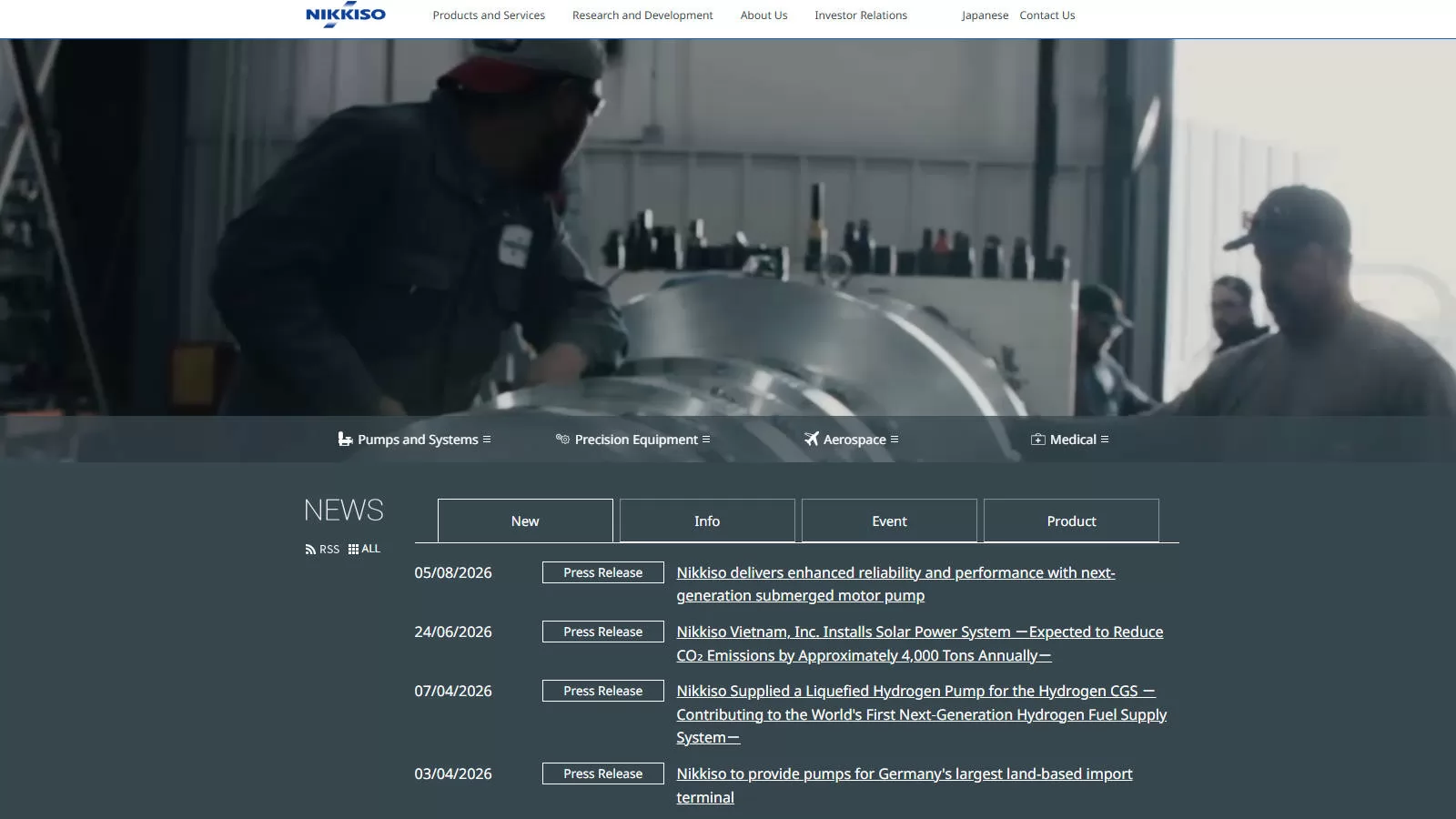
Nikkiso is a Japan-based manufacturer of specialized pumps and cryogenic equipment. Its cryogenic business covers LNG and other liquefied gases, with products and systems serving energy, marine, and industrial applications. Nikkiso’s current portfolio includes cryogenic submerged motor pumps as well as broader cryogenic pump and system solutions.
Products
Highlights
Nikkiso’s cryogenic submerged motor pumps are used for LNG feed and booster duties at land-based terminals, bunkering and CNG stations, and floating LNG applications. The company states that its pumps can be tested with LNG at approximately −162°C. It has also supplied cryogenic pumps for LNG regasification vessels and FSRUs.
Nikkiso also has a long development history in cryogenic pumping. Its own technical materials trace its cryogenic pump business back to the 1980s and describe applications across LNG liquefaction and receiving terminals, FSRUs, and power generation.
Key Strengths
Nikkiso’s strongest advantage is its broad LNG and cryogenic pump portfolio combined with long-term application experience. It is particularly relevant to large LNG infrastructure, floating LNG projects, marine applications, and buyers requiring multiple cryogenic pumping configurations.
Profile
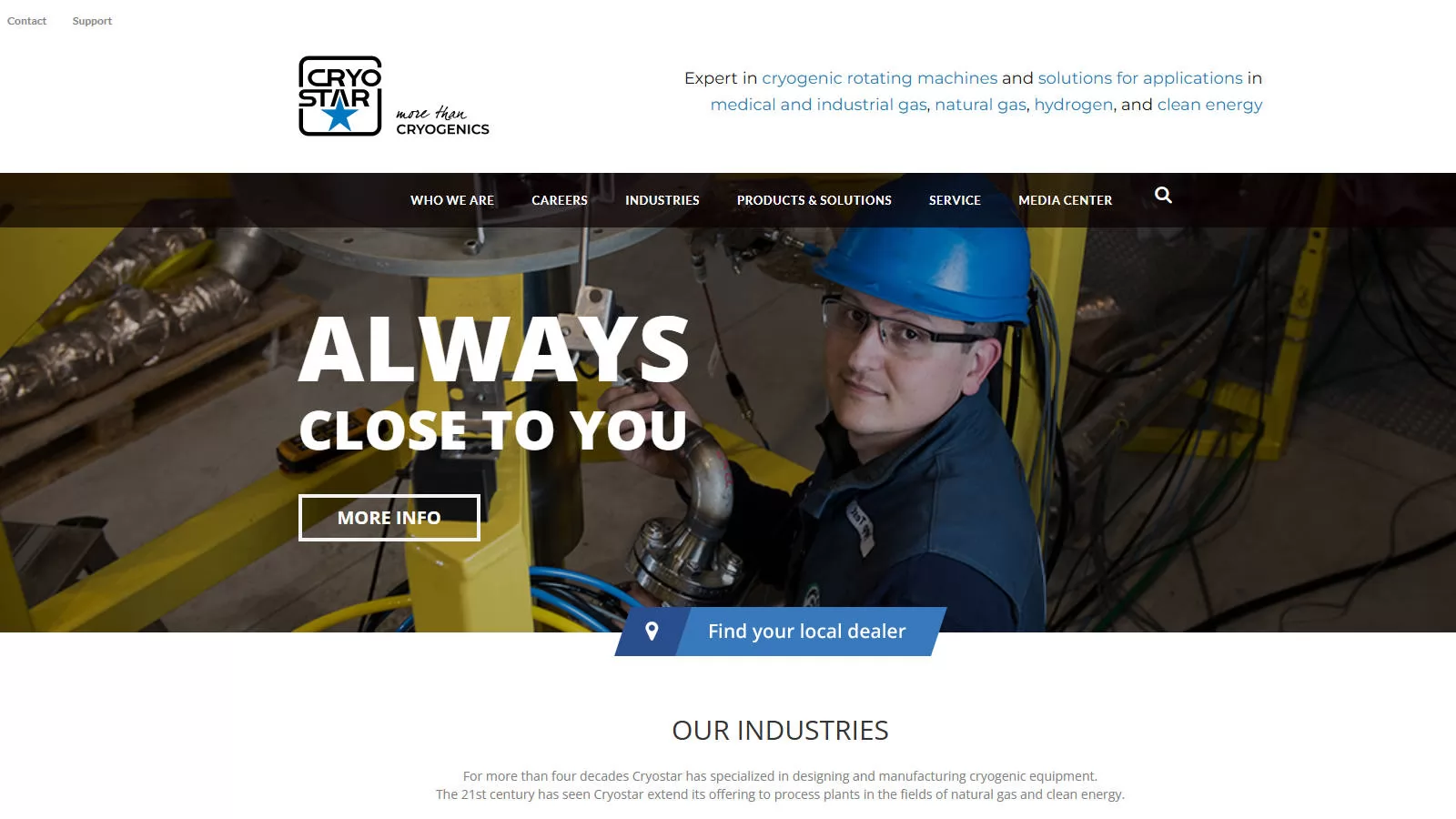
Cryostar is a France-based specialist in cryogenic rotating machinery and equipment. The company has focused on cryogenic equipment for more than four decades and serves natural gas, industrial gas, hydrogen, and other low-temperature applications.
Products
Highlights
Cryostar’s natural gas portfolio covers both land-based and marine applications. Its LNG bulk and microbulk solutions include submerged pumps capable of handling approximately 10–60 m³/h and up to 20 bar in specified configurations.
The company also develops cryogenic equipment for natural gas processing and related applications, giving its LNG pump offering a wider cryogenic engineering context.
Key Strengths
Cryostar’s key strength is its dedicated cryogenic specialization. It is a strong option for buyers looking for a manufacturer whose core engineering capabilities are closely connected to cryogenic rotating equipment, LNG transfer, and natural gas applications.
Profile
CRYO-TECH Industrial Company Limited is a China-based cryogenic equipment manufacturer supplying pumps and related equipment for liquefied gases. Its product portfolio includes cryogenic tanks, centrifugal pumps, piston pumps, and LNG-specific transfer solutions.
Products
Highlights
CRYO-TECH specifically identifies LNG applications including tank truck offloading, transfer, satellite station refilling, LNG power generation supply, and marine LNG bunkering. Its centrifugal LNG pump products are positioned for continuous transfer operations and adjustable performance through frequency control.
Its product portfolio also covers multiple cryogenic liquids, including LNG, liquid oxygen, liquid nitrogen, liquid argon, and liquid carbon dioxide.
Key Strengths
CRYO-TECH is particularly relevant to EPC contractors, distributors, industrial buyers, and international customers sourcing LNG pumps from China. Its combination of centrifugal and piston pump technologies, together with project-oriented customization, provides flexibility for LNG transfer, offloading, fueling, and bunkering requirements.
Profile
Ebara is a Japan-based manufacturer of pumps and energy-related equipment with established experience in cryogenic pumping. Its LNG activities extend across liquefaction, transportation, receiving terminals, and LNG carrier applications.
Products
Highlights
Ebara states that its cryogenic pumps are used in LNG plants, including liquefaction facilities in gas-producing countries, receiving terminals in consuming countries, and LNG carriers. The company also reports having supplied 113 cryogenic pumps to LNG receiving terminals in South Korea.
Its LNG experience therefore extends beyond individual pump products into large-scale LNG infrastructure.
Key Strengths
Ebara’s key strength is large-scale LNG project experience. It is particularly relevant for buyers involved in LNG receiving terminals, liquefaction infrastructure, LNG carriers, and other major energy projects requiring established cryogenic pumping capabilities.
Profile
Vanzetti Engineering is an Italian OEM specializing in cryogenic pumps. The company focuses on the design and manufacture of centrifugal and reciprocating cryogenic pumps for applications across industrial, automotive, marine, and other sectors.
Products
Highlights
Vanzetti Engineering covers a broad range of downstream LNG applications, including small-scale LNG terminals, LNG receiving terminals, satellite plants, LNG/Bio-LNG transfer, vehicle fueling, and ship-to-ship or shore-to-ship bunkering. Its marine portfolio also includes high- and low-pressure LNG pumping solutions.
For marine applications, its VT-3 reciprocating pump can reach a published maximum pressure of 420 bar in specified configurations.
Key Strengths
Vanzetti Engineering’s main strength is specialized LNG and cryogenic pump engineering across multiple downstream applications. It is particularly suitable for buyers looking for dedicated LNG pump technology for fueling stations, small-scale LNG, bunkering, marine systems, and industrial transfer.
Profile
Shinko Industries is a Japanese manufacturer with a strong focus on marine equipment and cryogenic liquefied-gas pumps. Its LNG pump business is particularly associated with LNG carriers and offshore LNG systems.
Products
Highlights
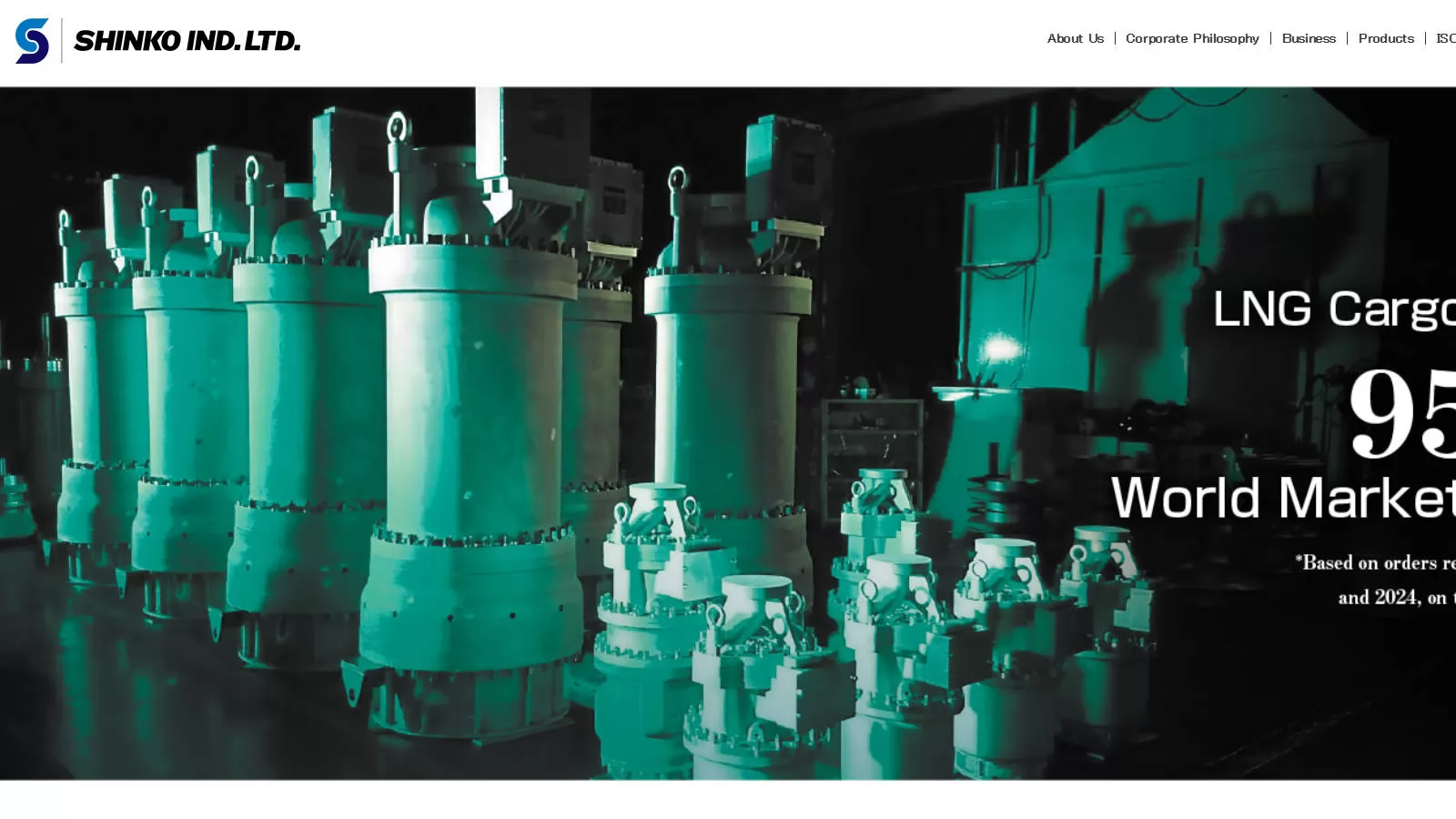
Shinko began developing cryogenic liquefied-gas pumps in the 1970s and established a dedicated testing facility in 1973. The company supplied its first marine LNG pumps to an LNG carrier in 1992 and states that its LNG pumps have achieved a global marine market share of more than 90%.
It also supplies pumps for FSRUs and other floating LNG systems.
Key Strengths
Shinko’s primary advantage is deep marine LNG specialization. Shipbuilders, LNG carrier operators, FSRU projects, and marine engineering companies may find its experience particularly relevant when selecting LNG cargo and transfer pump equipment.
Profile
Flowserve is a US-based global manufacturer of pumps and flow-control equipment for energy and industrial applications. Its cryogenic LNG portfolio includes engineered submerged motor pumps for demanding regasification applications.
Products
Highlights
Flowserve’s HP Series is designed for LNG regasification terminals and has published operating parameters of up to 600 m³/h flow, 2,400 m head, and 124 bar maximum pressure, with typical LNG temperature around −162°C. The series also references API 610 and NFPA 59A standards.
Key Strengths
Flowserve’s main strength is high-pressure cryogenic pumping for LNG regasification and large energy infrastructure. Buyers working with demanding head or pressure requirements can consider Flowserve when these parameters are critical to the project.
Profile
Sulzer is a Switzerland-based industrial engineering and pumping technology company. Its LNG portfolio includes high-pressure canned pumps designed for LNG loading and transfer applications.
Products
Highlights
Sulzer’s JVCR pump has published maximum characteristics of up to 1,130 m³/h capacity, 2,450 m head, and 150 bar pressure. The product is designed for LNG service at approximately −160°C and uses a modular construction intended to accommodate project piping requirements.
Key Strengths
Sulzer stands out for high-pressure LNG loading and transfer applications. It can be a strong candidate for industrial buyers evaluating pumps for LNG terminals, tanker loading systems, and tank-farm transfer duties.
Profile
Alfa Laval is a Sweden-based industrial manufacturer serving energy, marine, and process industries. Its cryogenic pump portfolio was significantly expanded after Alfa Laval completed the acquisition of Fives Energy Cryogenics in July 2025.
Products
Highlights
Alfa Laval’s acquisition of Fives Energy Cryogenics brought Cryomec centrifugal and reciprocating pump technologies into its portfolio. The acquired business had more than 65 years of experience designing and manufacturing cryogenic heat exchangers and pumps for gas liquefaction.
Alfa Laval now positions these cryogenic technologies for LNG, marine, hydrogen, and other low-temperature applications. Its Cryomec centrifugal pumps are available in vertical and horizontal configurations, while the reciprocating range is aimed at applications requiring different pressure and flow characteristics.
Key Strengths
Alfa Laval’s key strength is the combination of established global industrial and marine capabilities with expanded cryogenic pump technology. It is relevant for buyers looking for LNG pumping solutions that can fit into broader marine, energy, or process equipment projects.
Profile
Barber-Nichols is a US manufacturer of engineered pumps and turbomachinery for demanding applications. Its capabilities include in-house engineering, manufacturing, assembly, and testing of specialty pump systems.
Products
Highlights
Barber-Nichols specializes in low-pressure LNG fuel pumps for applications such as construction and mining equipment, locomotives, marine vessels, fueling stations, and tanker distribution. Its published LNG fuel pump applications generally target pressures below 20 bar (300 psi), depending on flow rate.
The company also provides submersible and externally mounted configurations for bulk LNG transfer.
Key Strengths
Barber-Nichols is particularly strong in LNG fuel pumping and specialized cryogenic pump engineering. It is a relevant option for buyers working with LNG fueling stations, high-horsepower engines, marine fuel systems, and bulk transfer rather than primarily large LNG receiving terminals.
Choosing the right LNG pump manufacturer depends on the requirements of the application rather than company size or brand recognition alone. LNG terminals, storage facilities, marine systems, fueling stations, and transfer applications can require significantly different pump configurations and performance levels.
The pump configuration should match how LNG is stored, transferred, or consumed.
The final selection should consider flow, head, pressure, LNG temperature, installation arrangement, and operating conditions together.
Flow rate, pump head, and pressure are different performance parameters. A pump with a high maximum flow rate is not automatically suitable for a high-head application.
Buyers should provide manufacturers with the required operating point and compare proposed pumps based on:
Comparing pumps at equivalent operating conditions is more useful than comparing isolated maximum values from different manufacturers.
LNG is typically stored and transferred at approximately −162°C. At cryogenic temperatures, material properties, dimensional tolerances, seals, bearings, lubrication, and other components require careful engineering.
Buyers should verify that the proposed pump is specifically designed for the required LNG temperature and service conditions. Material compatibility and thermal contraction should also be addressed during technical evaluation.
Certification requirements depend on the application, installation location, pressure system, and applicable regulations. Depending on the project, buyers may need to evaluate:
A company-level certification does not necessarily mean that every pump model meets the same requirements. Buyers should request the relevant certificates, test reports, inspection records, drawings, performance data, and technical documentation for the specific pump being considered.
Not every LNG equipment supplier has the same manufacturing capability. Buyers should determine whether the company designs, manufactures, assembles, and tests its own pumps or primarily acts as a distributor or system integrator.
Customization may involve:
For OEMs, EPC contractors, and distributors, engineering support and spare-parts availability should also be considered before selecting a long-term supplier.
The best LNG pump manufacturer for an LNG carrier may not be the best choice for a satellite LNG station, vehicle fueling system, or LNG receiving terminal.
Application experience should therefore be evaluated alongside technical specifications. Buyers should look for evidence that the manufacturer has supplied equipment for applications similar to the intended project.
Before placing an order, the buyer should provide complete operating conditions and request a project-specific technical proposal covering flow, head, pressure, LNG temperature, NPSH, motor configuration, installation arrangement, applicable standards, testing requirements, and expected operating conditions.
The best LNG pump manufacturer depends on the application, operating conditions, and technical requirements of the project. Nikkiso and Cryostar offer broad cryogenic and LNG pump capabilities, while Ebara and Shinko are particularly relevant to large-scale and marine LNG applications. Vanzetti Engineering provides specialized cryogenic pump solutions across fueling, bunkering, small-scale LNG, and marine applications, while Flowserve and Sulzer are strong candidates for demanding high-pressure LNG applications.
For buyers sourcing from China, CRYO-TECH Industrial Company Limited is also worth considering for cryogenic centrifugal and piston pumps used in LNG transfer, offloading, fueling, and bunkering applications. With China-based manufacturing capabilities and project-oriented customization, CRYO-TECH may be a practical option for distributors, EPC contractors, and industrial buyers with specific pump requirements.
Ultimately, pump type, flow rate, head, pressure, cryogenic temperature capability, application experience, certification, customization, and after-sales support should be evaluated together. Comparing these factors against the actual operating requirements is the most reliable way to select an LNG pump for a specific project.








.png)



.png)